Scotland's weather conditions can be adverse at the best of times, with both heavy wind and rainfall, which never really lets timber dry out throughout the autumn and winter months.
This is why picking the right wood for fencing matters, ensuring a long fence lifespan and preventing the need for replacement within a couple of years.
Looking to discover the best options for fence flats and boards? Our guide covers the best timber options for slatted fences and fence boards.
Best Wood for Slatted Fences in Scotland
The two things that really determine timber performance as a fence board in Scotland are the ability to shed moisture and natural resistance to rot.
Hardwoods do both brilliantly, but are on the more expensive end. A treated softwood closes the gap and is ultimately what you’ll find in most Scottish gardens.
The two things that determine how well a timber performs as a fence board in Scotland are its ability to shed moisture and its natural resistance to rot once moisture inevitably gets in. Hardwoods win on both counts but cost considerably more. Treated softwoods close the gap significantly and are what most residential fencing in Scotland is built from, for good reason.
Pressure Treated Redwood
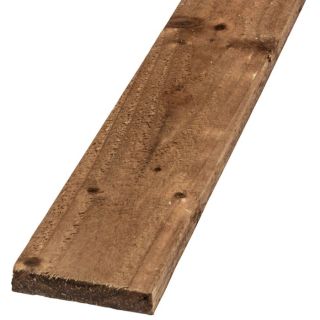
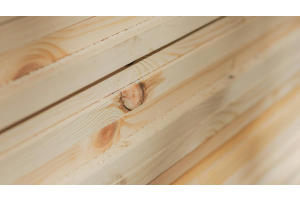
This is the workhorse of Scottish fencing. European Redwood is pressure-treated with preservative under vacuum to push the treatment deep into the grain, rather than just coating the surface, making the board resistant to rot and fungal attack for over a decade with proper maintenance.
Siberian Larch
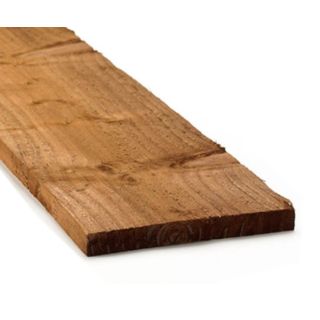
Nowadays, larch is one of the popular options in contemporary slatted screening fences, and does far more than look the part; naturally resinous, it has a resistance to moisture and decay that softwoods generally cannot match without treatment.
Western Red Cedar
Cedar is the go-to for slatted fencing across Scandinavia and North America, and it performs equally well in Scotland. It is naturally rot-resistant, lightweight, dimensionally stable, and it takes preservative oils extremely well. Its aromatic properties also make it naturally resistant to insects, though a bit more expensive.
Oak
Oak is occasionally used for fence boards, particularly for more traditional post-and-rail styles, but it is rarely the right call for modern slatted fencing in Scotland. It is heavy, expensive, prone to splitting if dried too quickly, and the tannins in it will stain adjacent stonework or concrete.
How Different Woods Compare:
Wood Type | Price | Lifespan | Rot Resistance | Stability | Best For |
Treated Redwood / Pine | Low | 15 to 25 years | Good, due to being treated | Moderate | Most residential fencing |
Siberian Larch | Mid | 20 to 30 years | Very good (natural) | Good | Contemporary Screening |
Western Red Cedar | High | 25 to 35 years | Excellent (natural) | Excellent | Premium or exposed fencing |
Oak | Very high | 30+ years | Excellent (natural) | Moderate (can split) | Posts, traditional styles |
Untreated Softwood | Lowest | 3 to 7 years | Poor | Poor | Avoid for outdoor use |
All lifespan figures assume regular treatment with a quality fence preservative every two to three years and that cut ends are re-treated at installation.
How Many Fence Boards Do I Need?
This is one of those questions that sounds simple but catches people out when they get to the site. The number of boards you need depends on three things: the length of the fence run, the width of your boards, and whether you are spacing the slats or butting them tight.
For a standard 100mm-wide fence slat with a 10mm gap between each board, you are covering 110mm of fence run per slat, which works out at roughly 9 slats per linear metre. For a 150mm-wide slat with the same gap, it is 6 slats per metre.
As a quick reference for 100mm slats with a 10mm gap:
3m run: approximately 27
5m run: approximately 45
10m run: approximately 90
15m run: approximately 135
20m run: approximately 180
Always add 5 to 10% to account for cut waste, any boards with defects, and the inevitable miscalculation at one end of the run.
Is It Cheaper to Make Your Own Slatted Fence Panels?
This comes up all the time, and the answer is no, not by any meaningful margin, and often it works out more expensive once you factor everything in properly.
Buying pre-made fence panels looks affordable until you price up individual boards, rails, and fixings separately. When you account for the timber, the rails, the fixings, the time to build, and the cutting waste, DIY panel fabrication rarely saves money over buying ready-made panels, and it never saves time.
Sourcing Fencing Products in Scotland
If you’re completing a fencing job in Scotland, we’ve got a range of options to help you.
For specific advice, feel free to get in touch with us.