


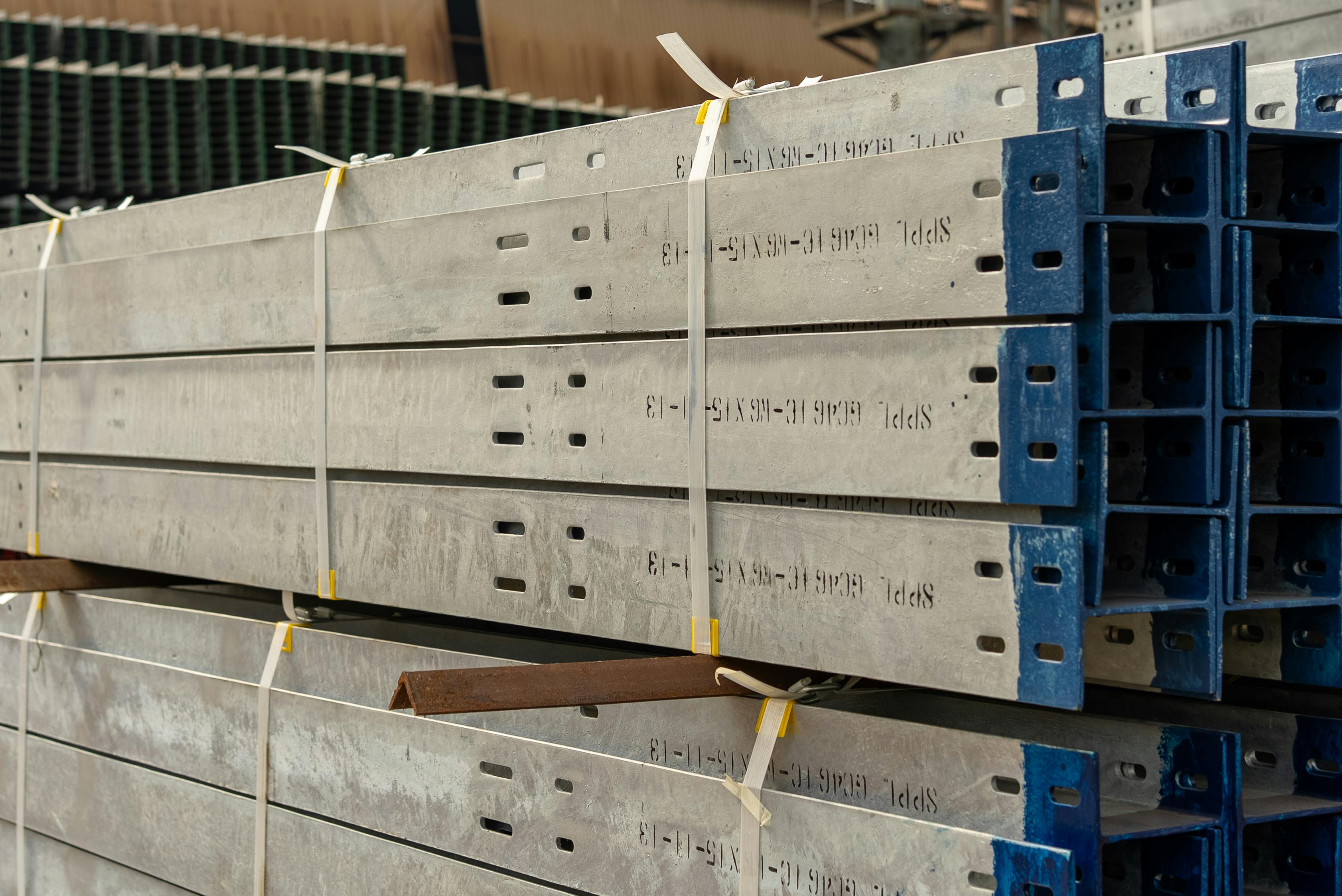
A T-type lintel is a galvanised steel profile shaped like an inverted T, specifically engineered to span openings in cavity walls and support both the inner and outer leaf simultaneously.
Used in residential and commercial new-build projects across the UK, T-type lintels are manufactured by brands such as Catnic, IG, and Birtley.
For external cavity wall openings needing a single component to carry load across both wall leaves, they are often chosen as the best option.
Key Variants of T-Type Lintels
Not all T-type lintels are the same, so it’s good to get an understanding of the variants to ensure you find the right product:
Standard T-Type
The most common option for residential cavity walls is a 50 to 75mm cavity. The horizontal flange supports the outer leaf (typically facing brick) while the vertical web carries the inner blockwork. Suitable for standard cavity walls up to around 100mm inner leaf thickness.
Thermally Broken T-Type
Designed for Part L compliance, these lintels are made up with a thermal barrier between the inner and outer sections, significantly reducing cold bridging. Increasingly specified on new-build projects where SAP calculations are tightly managed. If you're working to the current Building Regulations, a thermally broken variant should be your default unless the thermal specification is being met in another way.
Thermally Broken T-Type
Designed for Part L compliance, these lintels are made up with a thermal barrier between the inner and outer sections, significantly reducing cold bridging. Increasingly specified on new-build projects where SAP calculations are tightly managed. If you're working to the current Building Regulations, a thermally broken variant should be your default unless the thermal specification is being met in another way.
How to Select the Correct Lintel
When selecting a T-type lintel, three factors drive the specification:
Opening Width: Start by measuring the clear span of the opening; from there, proceed to add the required end bearing (typically 150mm each side for residential). A 900mm clear opening requires a lintel of at least 1200mm.
Wall Construction: Confirm the inner leaf thickness (usually 100mm blockwork) and total wall width, including the cavity. Standard T-type lintels suit 50 to 75mm cavities; specify wide-cavity versions for anything larger.
Load Type: Is the lintel carrying a load-bearing inner leaf, an external skin only, or both? If there are openings in external cavity walls, a full T-type will nearly always be needed. For internal partition walls, an L-type or boot lintel may be sufficient instead.
Lintel Sizing Guide and Safe Working Loads
The table below gives indicative safe working loads (SWL) for standard T-type lintels over common span widths. Always verify with the manufacturer's load tables for your specific product and wall configuration.
| Clear Opening | Lintel Length | Typical SWL (kN/m) |
| Up to 600mm | 900mm | 30 to 40 kN/m |
| Up to 900mm | 1200mm | 20 to 30 kN/m |
| Up to 1200mm | 1500mm | 15 to 25 kN/m |
| Up to 1800mm | 2100mm | 10 to 20 kN/m |
| Up to 2400mm | 2700mm | 8 to 15 kN/m |
Steel Lintels Online at The Builders Supply Company
Hopefully, you now have a clearer understanding of steel lintels; order online at The Builders Supply Company.
Get in touch if you would like specific advice on your project.
FAQs
What is the difference between a T-type and an L-type lintel?
A T-type lintel supports both the inner and outer leaves of a cavity wall simultaneously. An L-type (or boot lintel) supports the outer leaf only and is used where the inner leaf is non-load-bearing or where a separate padstone arrangement handles inner leaf loads. T-type lintels are almost always specified for external cavity wall openings.
Do I need a padstone under a steel lintel?
For standard residential openings with normal masonry, a padstone is not always required as the lintel bearing directly onto blockwork is often sufficient.
For wide spans, heavily loaded walls, or where the bearing is onto thin or weak masonry, a concrete or engineering brick padstone distributes the load safely. Check your structural drawings or consult your engineer if in doubt.
How do I calculate lintel size for an opening?
Start with the clear opening width and add 150mm bearing on each side to get the minimum lintel length. Then identify the load from above, dead load from masonry plus imposed loads from floors or roof, and check this against the manufacturer's safe working load table for that span. If loads exceed standard SWL values, move to a heavier section or seek a structural engineer's sign-off.